 My Account
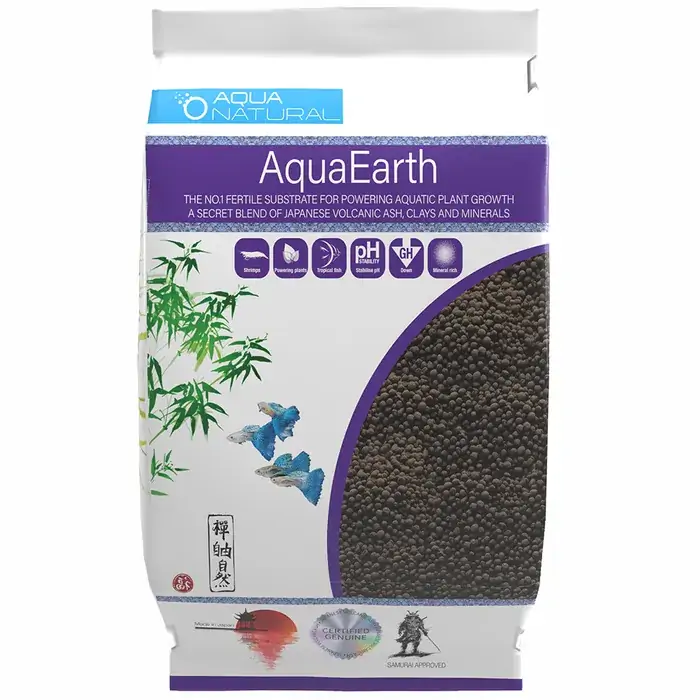

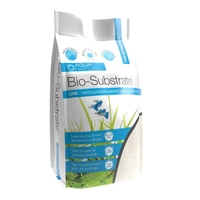
Aqua Natural AquaEarth 3L Planted Aquarium Soil
Product Code: AN_AQUAEARTH07

Dispatch In 1-2 Business Days
or 4 payments of $10.74 with
 Info
Info
Aqua Natural AquaEarth 3L Planted Aquarium Soil
Aqua Natural AquaEarth 3L is a fertile planted aquarium soil developed with aquascaper Oliver Knott for freshwater planted tanks, aquascapes and shrimp aquariums. Made from a blend of Japanese volcanic ash, natural clays and minerals, AquaEarth creates a dark, natural-looking substrate while providing an excellent rooting medium for aquatic plants.
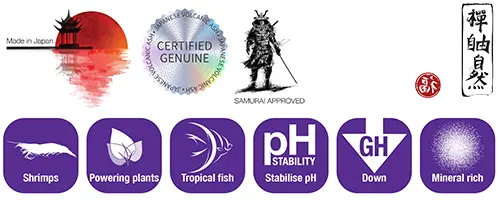
Unlike ordinary decorative gravel or sand, AquaEarth is an active planted aquarium substrate designed to interact with the aquarium environment. Its mineral-rich composition helps support plant growth, provides additional surface area for beneficial microorganisms and is promoted for its ability to reduce general hardness (GH).
The 3 litre bag is particularly useful for nano aquariums, smaller planted tanks and shrimp setups, or for adding additional depth to selected areas of a larger aquascape.
Browse our full range of planted aquarium substrates and aquasoils if you are comparing AquaEarth with other active and inert substrate options.
AquaEarth 3L at a Glance
- Brand: Aqua Natural / Oliver Knott
- Product: AquaEarth Aquarium Soil
- Pack Size: 3 litres
- Substrate Type: Fertile active aquarium soil
- Composition: Japanese volcanic ash, natural clays and minerals
- Suitable For: Planted freshwater aquariums, aquascapes and shrimp tanks
- Can Be Used Alone: Yes
- Rinse Before Use: No – use unwashed
- Water Chemistry: Designed to help reduce GH
- Maintenance: Do not deep vacuum
- Not Recommended For: Strongly burrowing fish
Why Choose AquaEarth for a Planted Aquarium?
The substrate forms the foundation of a planted aquarium. Rooted aquatic plants need a medium that allows their roots to establish while remaining stable enough to hold plants securely in place.
AquaEarth has been developed specifically for this purpose. Its granular structure creates a plant-friendly substrate bed, while its blend of volcanic material, clay and minerals provides a more specialised environment than ordinary inert aquarium gravel.
AquaEarth can be used as the complete substrate bed without requiring a layer of ordinary gravel or sand over the top. This makes it a straightforward option for anyone building a new planted aquarium or aquascape.
If you're planning a new planted setup, you can also browse our live aquarium plants or read our guide to choosing aquarium plants for a fish tank.
Is AquaEarth an Active Aquasoil?
Yes. AquaEarth is best considered an active aquasoil or planted aquarium soil rather than an inert decorative substrate.
The product is promoted as helping to reduce general hardness (GH), so it should not be treated as chemically neutral gravel or sand. The amount of change will depend on your source water, aquarium conditions and the age of the substrate.
For this reason, test your aquarium water after setup and continue monitoring pH, GH and KH when keeping fish or shrimp with particular water requirements.
If you specifically want a substrate that has minimal effect on water chemistry, compare AquaEarth with the inert options in our broader aquarium substrate, gravel and sand range.
AquaEarth for Shrimp Tanks
AquaEarth is suitable for freshwater shrimp aquariums and is a particularly attractive option for planted shrimp setups where a dark natural substrate is desired.
The porous substrate provides additional surface area for microorganisms and biofilm to develop, while aquatic plants can establish throughout the substrate bed.
However, different freshwater shrimp have different water requirements. Because AquaEarth can influence hardness, always test the resulting aquarium parameters and match them to the particular shrimp species you intend to keep rather than assuming every shrimp requires the same conditions.
How to Use AquaEarth Aquarium Soil
- Do not rinse AquaEarth. Use the soil directly from the bag.
- If you intend to use any compatible base additives, place these in the empty aquarium first.
- Spread AquaEarth evenly across the aquarium base.
- Use a substrate tool, scraper or ruler to create the desired depth and slope.
- Slowly add water until it sits approximately 3–4cm above the substrate.
- Plant the aquarium while the water level is low, keeping exposed plants moist while you work.
- Once planting is complete, slowly fill the aquarium to its normal water level.
- Start the filtration system and allow the aquarium to settle and clear.
Adding water slowly helps prevent the AquaEarth granules from being disturbed. Pouring the water onto a plate, plastic bag or other flat surface can make filling a newly planted aquarium easier.
Do You Rinse AquaEarth Before Use?
No. AquaEarth is intended to be placed into the aquarium unwashed.
This is an important difference between AquaEarth and many ordinary aquarium gravels or sands, which may require rinsing to remove loose dust. Always follow the preparation instructions for the particular substrate rather than assuming every aquarium substrate should be washed.
How Deep Should AquaEarth Be?
Planted aquariums generally need enough substrate depth for plant roots to establish securely. Around 3–5cm or more is a useful starting point for many planted layouts, although the ideal depth depends on the plants and aquascape.
Aquascapers commonly create a shallower substrate bed near the front and build greater depth toward the rear. This provides more rooting space for larger background plants while creating visual perspective within the aquascape.
For more substrate choices and guidance, browse our planted aquarium substrate and aquasoil category.
How Much Aquarium Soil Does a 3L Bag Cover?
The amount of AquaEarth you need depends on the aquarium's length × width × desired substrate depth, rather than the aquarium's total water capacity.
A 3 litre bag represents approximately 3,000cm³ of substrate. As a simple volume guide, one 3L bag provides approximately:
- 30 × 20cm footprint: around 5cm average depth
- 30 × 30cm footprint: around 3.3cm average depth
- 45 × 30cm footprint: around 2.2cm average depth
- 60 × 30cm footprint: around 1.7cm average depth
These figures are approximate volume calculations. Aquascapes with slopes, raised areas or deeper planting zones will require additional substrate.
Does AquaEarth Need to Be Capped With Sand or Gravel?
No. AquaEarth can be used as a stand-alone planted aquarium substrate, so it does not need to be covered with gravel or sand.
You can still use decorative sand or gravel in separate areas of an aquascape if you want contrasting paths, foreground sections or other design features. Keeping different substrates in defined areas generally makes long-term maintenance easier than thoroughly mixing them together.
Maintaining AquaEarth Aquarium Soil
AquaEarth should not be cleaned like conventional aquarium gravel.
Avoid pushing a gravel vacuum deeply through the soil. Instead, gently siphon loose waste from immediately above the substrate surface during routine aquarium maintenance.
This helps avoid disturbing plant roots or breaking down the AquaEarth granules.
The water-conditioning properties of AquaEarth will naturally reduce as the substrate ages. This is normal for an active aquarium substrate and does not mean the entire substrate bed suddenly stops being usable.
When AquaEarth May Not Be the Best Substrate
AquaEarth is primarily intended for planted freshwater aquariums and aquascaping. Another substrate may be more appropriate if:
- Your fish strongly dig or continually rearrange the aquarium substrate
- You require a completely inert substrate with minimal influence on water hardness
- Your normal maintenance routine involves deep gravel vacuuming
- You are setting up a marine or saltwater aquarium
For alternative aquarium sands, gravels and specialised freshwater substrates, see our aquarium substrate, gravel and sand range.
AquaEarth 3L FAQs
Is AquaEarth good for aquarium plants?
Yes. AquaEarth is designed specifically as a fertile substrate for planted freshwater aquariums. Its blend of volcanic ash, clay and minerals provides a suitable rooting medium for aquatic plants.
Is AquaEarth the same as aquasoil?
AquaEarth is a planted aquarium soil and can be considered an active aquasoil because it is designed for planted tanks and can influence water hardness rather than behaving like completely inert gravel or sand.
Do I need to rinse AquaEarth before putting it in my aquarium?
No. AquaEarth is designed to be used unwashed. Place it directly into the empty aquarium and add water slowly to avoid disturbing the substrate.
Does AquaEarth lower GH?
AquaEarth is promoted for GH reduction. The degree of change will depend on the hardness of your source water, aquarium conditions and the age of the substrate, so GH should still be tested regularly.
Does AquaEarth lower aquarium pH?
The manufacturer specifically promotes AquaEarth for water-quality control and GH reduction but does not specify one universal final aquarium pH. Because source-water chemistry varies, test pH, KH and GH after setup rather than assuming AquaEarth will produce a particular pH value.
Is AquaEarth suitable for shrimp?
Yes. AquaEarth is suitable for freshwater shrimp aquariums. Because different shrimp species prefer different water parameters, check the resulting pH and hardness before selecting livestock.
Does AquaEarth need to be capped with sand or gravel?
No. AquaEarth can be used as a stand-alone aquarium substrate and does not require a gravel or sand cap.
How much AquaEarth do I need?
Calculate the required quantity from the aquarium's floor dimensions and the desired substrate depth. A 3L bag contains approximately 3,000cm³ of substrate and provides about 3.3cm depth over a 30 × 30cm footprint.
How deep should AquaEarth be in a planted tank?
Around 3–5cm or more is a useful starting point for many planted aquariums. Larger rooted plants and aquascapes with raised rear sections may require deeper areas.
Can AquaEarth be vacuumed?
Deep gravel vacuuming is not recommended. Gently siphon loose debris from above the substrate instead so the granules and plant roots are not unnecessarily disturbed.
How long does AquaEarth last?
There is no single fixed lifespan because water chemistry, maintenance and aquarium conditions vary. The manufacturer's information notes that AquaEarth's water-quality-control properties naturally decrease over time. The substrate itself can remain part of the aquarium while plant nutrition and water parameters are monitored and supplemented as required.
Does AquaEarth release ammonia when new?
The available AquaEarth product instructions do not specify a guaranteed ammonia-release level. Because every new aquarium still needs an established biological filter, cycle the aquarium and test ammonia and nitrite before adding fish or shrimp rather than assuming the water is safe based on the substrate alone.
Can AquaEarth be used on its own?
Yes. AquaEarth is designed to work as a stand-alone substrate. It can also be incorporated into more detailed aquascapes with separate decorative substrate areas if desired.
Complete your planted aquarium with our range of aquascaping supplies, planted aquarium substrates and aquasoils and live aquarium plants.
| SKU | AN_AQUAEARTH07 |
| Barcode # | 850053993336 |
| Brand | Aqua Natural Aquarium Products Australia |
| Shipping Weight | 4.5000kg |
| Shipping Width | 0.300m |
| Shipping Height | 0.100m |
| Shipping Length | 0.200m |
| Shipping Cubic | 0.006000000m3 |
| Unit Of Measure | ea |
You May Also Like


More From This Category
TRUSTED BY 100,000+ FISH-KEEPING ENTHUSIASTS AUSTRALIA-WIDE

Shop Now. Pay Later.
Always interest-free.

Add your favourites to cart

Select Afterpay at checkout

Log into or create your Afterpay account, with instant approval decision

Your purchase will be split into 4 payments, payable every 2 weeks
All you need to apply is to have a debit or credit card, to be over 18 years of age, and to be a resident of country offering Afterpay
Late fees and additional eligibility criteria apply. The first payment may be due at the time of purchase
For complete terms visit afterpay.com/terms