My Account


$7.95
FREE SHIPPING on all orders over $150 Exclusions Apply
Product Code: NSA-HENRAS2

Dispatch In 1-2 Business Days
or 4 payments of $1.74 with
 Info
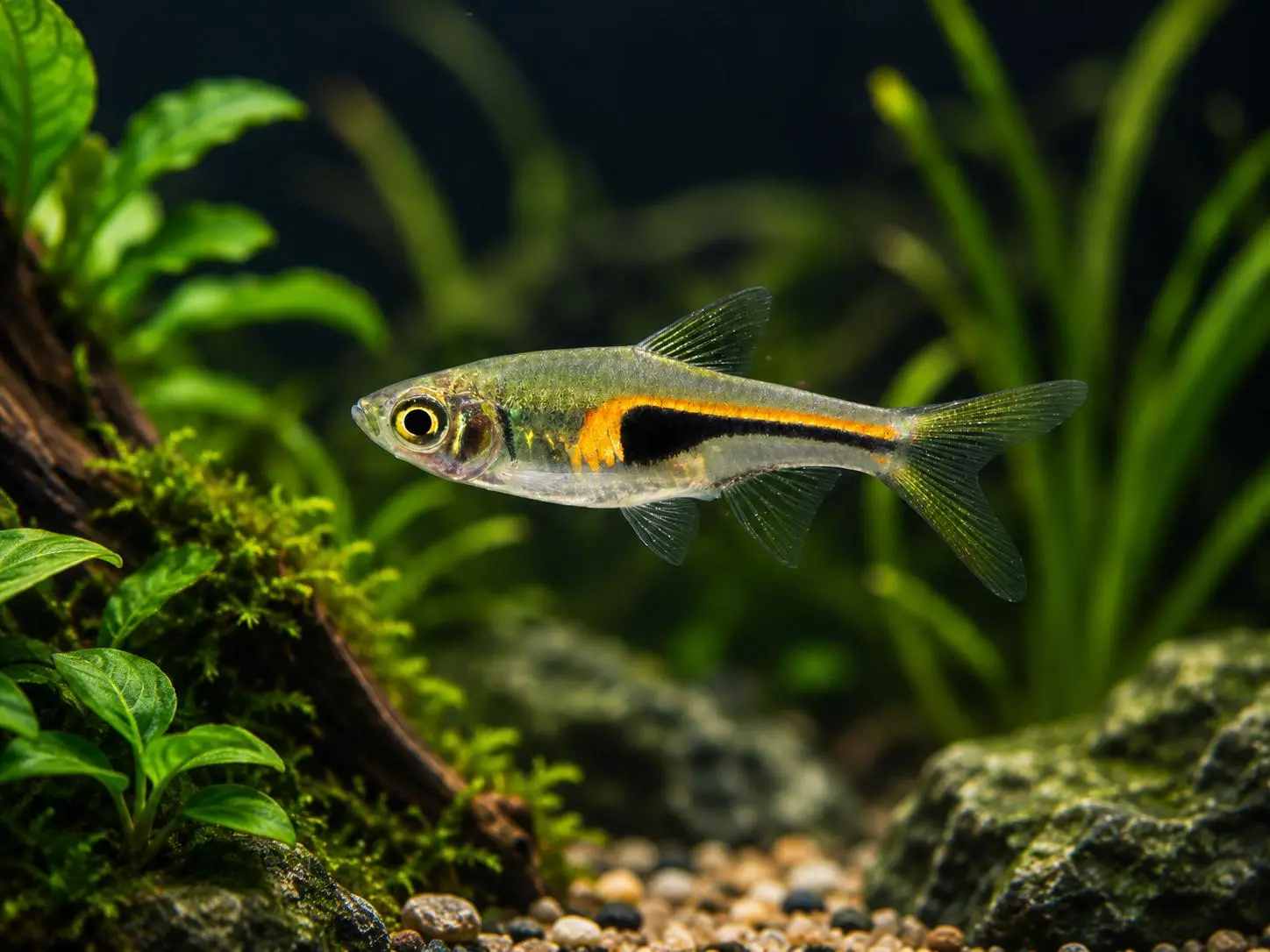
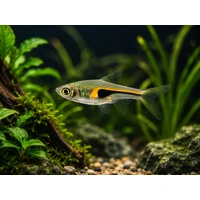
Hengeli Rasbora (Trigonostigma hengeli) is a beautiful, peaceful schooling fish recognised for its glowing orange stripe and distinctive black body marking. Its small size, gentle temperament and active swimming behaviour make it an excellent addition to planted freshwater community aquariums.
Growing to approximately 3cm, Hengeli Rasboras look particularly impressive when kept in groups of eight to ten or more. As the fish swim together, their bright orange markings create flashes of colour against green aquarium plants and darker substrates.
These attractive little fish are ideal for aquarists looking for a peaceful schooling species that adds movement and colour without dominating the aquarium.
Hengeli Rasboras are particularly attractive in aquariums with plenty of aquatic plants, natural wood and open swimming space.
Their translucent silver-grey bodies feature a black marking along the rear half, bordered by a vivid orange stripe. This distinctive colour pattern becomes especially noticeable when the fish feel secure in a well-planted aquarium.
A darker substrate, floating plants and areas of subdued lighting can help bring out their natural appearance.
Hengeli Rasboras are smaller and generally less deep-bodied than the familiar Harlequin Rasbora, making them a lovely alternative for smaller planted community displays.
Hengeli Rasboras are naturally social fish and should be maintained in groups of at least eight to ten individuals.
Keeping a larger group helps the fish feel secure and encourages more natural swimming and social behaviour. When kept in insufficient numbers, these small fish may become noticeably shy.
For the most attractive display, provide plenty of room for the fish to swim together through the middle and upper areas of the aquarium.
Our recommendation: Choose a group of ten or more Hengeli Rasboras for a well-established aquarium with suitable swimming space.
Hengeli Rasboras are very peaceful and can be housed with many similarly sized tropical community fish.
Suitable tank mates may include:
Avoid large predatory fish and aggressive species that may chase, stress or eat these small rasboras.
Adult dwarf shrimp may coexist with Hengeli Rasboras, but very small shrimplets can be eaten. A densely planted aquarium provides additional cover, although it cannot guarantee shrimplet safety.
Hengeli Rasboras naturally inhabit gently flowing forest streams with aquatic vegetation, fallen leaves and shaded areas.
To create a suitable aquarium environment:
Plants such as Cryptocoryne, Java Fern, Anubias and aquarium mosses work well in suitable setups.
Browse our aquascaping supplies to create a natural freshwater aquarium.
Hengeli Rasboras prefer clean, stable freshwater, typically on the softer and more acidic side.
Stable conditions are more important than attempting to achieve an exact pH value through sudden chemical adjustments.
Introduce Hengeli Rasboras only after your aquarium is fully cycled and the water parameters are appropriate for the species.
Hengeli Rasboras naturally feed on tiny invertebrates and other small aquatic organisms. In the aquarium, they readily accept a variety of appropriately sized prepared and frozen foods.
Suitable foods include:
Feed small amounts once or twice daily, offering only what the fish can comfortably consume.
A varied diet helps support healthy body condition and natural colouration.
Explore our aquarium fish food range for suitable tropical fish foods.
Hengeli Rasboras are sometimes confused with Harlequin Rasboras and Espei Rasboras because all three species have distinctive dark body markings.
However, Hengeli Rasboras are usually smaller and more slender, with a relatively translucent body and a bright orange stripe bordering the dark marking.
Harlequin Rasboras are generally larger and deeper-bodied, with a broader black triangular patch.
Hengeli Rasboras make an especially attractive choice where a smaller, more delicate-looking schooling fish is desired.
Hengeli Rasboras reach approximately 3cm as adults, making them one of the smaller commonly available Trigonostigma rasboras.
Keep at least eight to ten Hengeli Rasboras together. Larger groups can help them feel more secure and display natural schooling behaviour.
Yes. Hengeli Rasboras are relatively easy to care for in a mature, fully cycled aquarium with stable water parameters and peaceful tank mates.
They can coexist with many adult freshwater shrimp in a suitable aquarium. However, newly hatched shrimplets may be eaten.
Hengeli Rasboras are best maintained at approximately 23–28°C in stable tropical freshwater conditions.
No. They are very peaceful schooling fish and are generally suitable for community aquariums with other non-aggressive species.
A mature aquarium of approximately 54–60 litres or larger, with a footprint of at least 60 x 30cm, is a sensible minimum for a small group.
They accept fine tropical flakes, micro pellets and appropriately sized frozen or live foods such as Daphnia and baby brine shrimp.
| SKU | NSA-HENRAS2 |
| Brand | Live Fish |
| Shipping Weight | 1.0000kg |
| Shipping Width | 0.100m |
| Shipping Height | 0.100m |
| Shipping Length | 0.100m |
| Shipping Cubic | 0.001000000m3 |
| Unit Of Measure | ea |
$7.95

$11.95
$5.95


Add your favourites to cart

Select Afterpay at checkout

Log into or create your Afterpay account, with instant approval decision

Your purchase will be split into 4 payments, payable every 2 weeks
All you need to apply is to have a debit or credit card, to be over 18 years of age, and to be a resident of country offering Afterpay
Late fees and additional eligibility criteria apply. The first payment may be due at the time of purchase
For complete terms visit afterpay.com/terms