 My Account
Axolotl Care Guide: Tank Setup, Temperature, Feeding and Water Quality

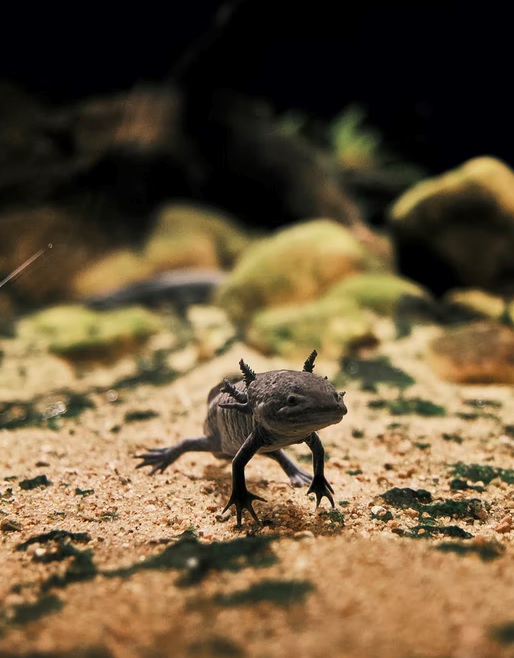
Axolotls, often called Mexican walking fish, are unusual aquatic salamanders known for their feathery external gills, wide heads and remarkable regenerative abilities.
They can make fascinating aquarium inhabitants, but their care is quite different from that of tropical fish. Axolotls need cool, clean water, gentle filtration, plenty of floor space and stable water quality.
This guide covers the basics of axolotl care, including tank size, temperature, filtration, feeding, substrate and water quality.
If you're looking to add one to your aquarium, you can also view our Axolotls – Mexican Walking Fish.
Axolotl Quick Care Guide
- Scientific name: Ambystoma mexicanum
- Common name: Axolotl / Mexican Walking Fish
- Adult size: Up to around 30cm
- Water type: Freshwater
- Temperature: Cool water, ideally around 16–18°C
- Ammonia: 0 ppm
- Nitrite: 0 ppm
- Temperament: Best kept in a species-only aquarium
- Diet: High-protein sinking foods and suitable natural foods
What Is an Axolotl?
The axolotl is an aquatic salamander native to the waterways of Xochimilco in Mexico.
Unlike many other salamanders, axolotls normally remain aquatic throughout their lives and retain their larval features, including their distinctive external gills.
They are available in several colour forms, including wild-type, leucistic, albino and darker varieties.
One of the most remarkable features of axolotls is their ability to regenerate damaged tissue, including limbs. Despite this ability, injuries should still be avoided because wounds can lead to stress and infection.
What Size Tank Does an Axolotl Need?
Axolotls spend most of their time near the bottom of the aquarium, so floor space is more important than having a very tall tank.
For one adult axolotl, a tank of around 75 to 100 litres or larger is a practical starting point. Larger aquariums are generally easier to keep stable and provide more swimming and resting space.
If keeping more than one axolotl, allow considerably more space and make sure the animals are similar in size.
Browse our range of aquariums and complete setups when planning a new tank.
Axolotl Water Temperature
Axolotls are a cool-water species and do not tolerate prolonged warm conditions well.
A practical target is around 16 to 18°C.
Try to avoid prolonged temperatures above approximately 20°C where possible. High temperatures can increase stress and make water-quality problems more difficult to manage.
This is particularly important during Australian summers.
To help keep the aquarium cool:
- Keep the tank away from direct sunlight
- Position the aquarium in the coolest practical part of the home
- Use aquarium cooling fans where suitable
- Consider a dedicated aquarium chiller in consistently warm conditions
- Monitor temperature with an aquarium thermometer
Avoid rapid temperature swings. Stable cool water is preferable to repeatedly making large sudden changes.
Water Quality for Axolotls
Good water quality is one of the most important parts of axolotl care.
The aquarium should be fully cycled before an axolotl is added.
In a stable aquarium:
- Ammonia should be 0 ppm
- Nitrite should be 0 ppm
- Nitrate should be controlled through regular water changes
Axolotls can be sensitive to poor water quality, so regular testing is important.
Browse our aquarium water test kits for ammonia, nitrite, nitrate and other water parameters.
If you detect ammonia, see our guide to fish tank ammonia spikes, causes and treatment.
Water Changes
Regular partial water changes help control nitrate and remove accumulated waste.
The exact schedule depends on your aquarium size, filtration and stocking level, but routine water testing will tell you when maintenance is required.
Always treat tap water with a suitable water conditioner before it enters the aquarium.
Seachem Prime is one option for treating chlorine and chloramine in tap water.
Choosing an Axolotl Filter
Axolotls produce a relatively high amount of waste, so good filtration is important.
At the same time, they generally prefer gentle water movement.
A suitable filter should provide:
- Good biological filtration
- Effective mechanical filtration
- Gentle water flow
- Enough capacity for the aquarium's bioload
Strong currents can cause stress, so avoid directing a powerful outlet straight across the area where the axolotl rests.
Explore our range of aquarium filtration when choosing a filter for an axolotl setup.
Biological Filtration
A healthy biological filter supports the beneficial bacteria responsible for converting ammonia and nitrite into less harmful nitrate.
Because axolotls produce substantial waste, adequate biological filtration is especially important.
Avoid replacing all biological media at once or aggressively cleaning the entire filter in one session.
What Substrate Is Safe for Axolotls?
Substrate choice is important because axolotls may accidentally swallow material while feeding.
For adult axolotls, fine aquarium sand is commonly used.
A bare-bottom aquarium is another option, particularly for younger animals or where easy cleaning is a priority.
Avoid ordinary aquarium gravel and small pebbles that could be swallowed.
You can browse suitable options in our aquarium substrate, gravel and sand range, but always choose a fine substrate specifically suited to the animal rather than coarse gravel.
Axolotl Tank Decorations and Hiding Places
Axolotls benefit from shaded areas and secure hiding places.
Suitable options can include:
- Smooth caves
- PVC or aquarium-safe tubes
- Smooth driftwood where appropriate
- Artificial hides
- Hardy live plants
Avoid decorations with sharp or rough edges that could damage their delicate skin or external gills.
Do Axolotls Need Aquarium Lighting?
Axolotls generally do not require strong aquarium lighting.
They often prefer dimmer conditions and shaded areas.
If you use lighting for live plants, provide caves, plants or other shaded locations so the axolotl can move away from bright light.
Can You Keep Live Plants with Axolotls?
Yes. Live aquarium plants can be used in an axolotl tank if they tolerate the cooler water and lower-light conditions.
Plants can also provide shade and additional cover.
Remember that axolotls may uproot plants as they move around the aquarium, so hardy plants or plants attached to hardscape can be useful.
Can Axolotls Live with Fish?
Axolotls are generally best kept in a species-only aquarium.
Small fish may be swallowed, while larger or active fish may nip at the axolotl's delicate external gills.
Fish may also introduce additional waste, competition for food or disease risks.
Keeping axolotls by themselves usually makes feeding, water-quality management and observation much easier.
Can Axolotls Live Together?
Adult axolotls can sometimes be housed together when:
- They are similar in size
- The aquarium is large enough
- There are multiple hiding places
- Food is provided consistently
- Water quality remains excellent
Significant size differences can increase the risk of biting or injury.
What Do Axolotls Eat?
Axolotls are carnivorous and need a protein-rich diet.
Suitable foods for adults can include:
- Earthworms
- Suitable sinking axolotl or amphibian pellets
- Other appropriately sized, nutritionally suitable foods
A sinking food is useful because axolotls usually feed from the bottom of the aquarium.
Avoid relying on feeder fish as a routine diet because they can introduce disease and are not necessary for good nutrition.
How Often Should You Feed an Axolotl?
Feeding frequency depends on age, size and condition.
Juveniles generally need feeding more frequently than adults.
Healthy adults are often fed every two to three days, with the amount adjusted according to body condition and appetite.
Remove uneaten food promptly so it does not break down and contribute to ammonia.
Handling Axolotls
Axolotls should generally be handled as little as possible.
Their skin is delicate and covered in a protective mucus layer that can be damaged by unnecessary handling.
If an axolotl must be moved, minimise contact and use an appropriate aquarium container where practical.
Signs Your Axolotl May Be Stressed
Watch for changes such as:
- Reduced appetite
- Unusual inactivity
- Persistent floating
- Rapid gill movement
- Gills curling forward for long periods
- Skin or gill changes
- Unusual swimming behaviour
These signs are not specific to one problem, so check water temperature and water quality first if behaviour suddenly changes.
Frequently Asked Questions
What temperature should an axolotl tank be?
Axolotls prefer cool water. A practical target is around 16 to 18°C. Prolonged temperatures above approximately 20°C are best avoided where possible.
What size tank does an axolotl need?
Around 75 to 100 litres or larger is a practical starting point for one adult. Floor space is particularly important.
What should ammonia and nitrite be in an axolotl tank?
Both ammonia and nitrite should be maintained at 0 ppm.
If either is detectable, investigate the cause and correct the water-quality problem.
What substrate is safe for axolotls?
Fine aquarium sand is commonly used for adult axolotls. Bare-bottom tanks are another option.
Avoid gravel and small stones that could be accidentally swallowed.
Can axolotls live with fish?
It is generally better to keep axolotls in a species-only aquarium.
Small fish may become prey, while other fish can damage their delicate gills.
What do axolotls eat?
Axolotls need a protein-rich diet. Earthworms and suitable sinking axolotl or amphibian foods are commonly used.
Do axolotls need a filter?
Yes. Good filtration helps control waste and provides biological filtration.
Choose a system that provides adequate filtration without producing excessive water flow.
Do axolotls need a heater?
Normally no. Axolotls prefer cool water, so in many Australian homes the bigger challenge is preventing the aquarium from becoming too warm.
Shop Axolotl Supplies Online
Setting up an axolotl aquarium starts with cool, clean water, adequate filtration and the right tank environment.
Helpful Aquaholics resources include:
TRUSTED BY 100,000+ FISH-KEEPING ENTHUSIASTS AUSTRALIA-WIDE

Shop Now. Pay Later.
Always interest-free.

Add your favourites to cart

Select Afterpay at checkout

Log into or create your Afterpay account, with instant approval decision

Your purchase will be split into 4 payments, payable every 2 weeks
All you need to apply is to have a debit or credit card, to be over 18 years of age, and to be a resident of country offering Afterpay
Late fees and additional eligibility criteria apply. The first payment may be due at the time of purchase
For complete terms visit afterpay.com/terms