My Account
FREE SHIPPING on all orders over $150 Exclusions Apply
Shop Corydoras catfish online at Aquaholics Online.
Corydoras are peaceful freshwater catfish known for their social behaviour, active personalities and constant foraging along the bottom of the aquarium. They are one of the most popular choices for community tanks and are available in a wide range of colours, patterns and species.
Our range may include Bronze Corydoras, Albino Corydoras, Panda Corydoras, Sterbai Corydoras, Peppered Corydoras, Julii-type Corydoras and other varieties depending on availability.
Corydoras are generally peaceful and well suited to community aquariums with other non-aggressive freshwater fish.
They spend much of their time exploring the lower levels of the tank and are especially interesting to watch when kept in suitable groups.
Because Corydoras are social fish, they are usually best maintained with others of their own or a compatible Corydoras species rather than being kept alone.
Corydoras naturally display social behaviour and generally feel more secure in groups.
Keeping several together can encourage more natural activity, including group foraging and swimming.
The exact number you can keep will depend on aquarium size, species and filtration, but larger suitable groups are generally preferable to keeping a single fish.
Corydoras are relatively small fish, but they still need adequate floor space.
Because they spend much of their time on the substrate, the footprint of the aquarium is particularly important.
Smaller Corydoras species may suit compact community aquariums, while larger species benefit from more space.
Always consider adult size and group size when choosing an aquarium.
A smooth, fine substrate is generally ideal for Corydoras.
Sand is particularly popular because it allows them to forage naturally using their sensitive barbels.
Avoid sharp or abrasive gravel that may damage the mouth or barbels over time.
A clean substrate is also important, as Corydoras spend much of their time in direct contact with the aquarium floor.
Corydoras should not be expected to survive on leftover food alone.
They require a complete diet designed for bottom-feeding fish.
Suitable foods may include:
Make sure enough food reaches the bottom of the aquarium, especially when Corydoras are kept with fast-feeding community fish.
Corydoras are usually compatible with peaceful freshwater community fish.
Potential tank mates can include:
Avoid keeping Corydoras with highly aggressive or predatory fish that may harass or injure them.
Corydoras generally prefer clean, stable freshwater conditions.
Exact requirements vary by species, but most commonly kept Corydoras do well in typical tropical aquarium temperatures with regular maintenance and good filtration.
Stable conditions are more important than frequent changes to water chemistry.
Always check the individual species requirements where possible.
Good water quality is especially important for Corydoras because they spend much of their time near the bottom of the aquarium.
Use reliable filtration, perform regular water changes and avoid allowing excessive waste to build up in the substrate.
Gentle to moderate water movement is generally suitable, provided there are calmer areas where the fish can rest.
A Corydoras aquarium can include:
Live plants can create a natural environment while providing shelter and helping break up open spaces.
Corydoras also appreciate areas where they can easily forage across the substrate.
Corydoras are generally excellent fish for planted aquariums.
They do not usually damage healthy plants and can coexist well with planted layouts.
Choose substrate and planting methods that still leave open areas for bottom foraging.
Bronze Corydoras are hardy, peaceful and one of the most widely kept Corydoras species.
They are a good choice for many freshwater community aquariums.
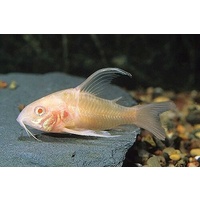
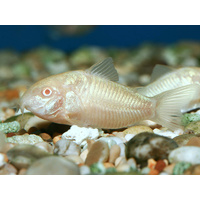
Albino Corydoras are usually an albino form of the Bronze Corydoras and share similar care requirements.
Their pale colouration makes them easy to spot in planted or darker aquariums.
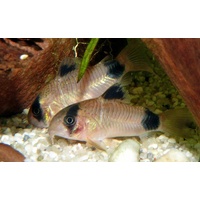
Panda Corydoras are popular for their distinctive black-and-white markings and peaceful temperament.
They are particularly attractive when maintained in groups.
Sterbai Corydoras are known for their attractive spotted pattern and orange-tinted fins.
They are a popular choice for warm tropical community aquariums.
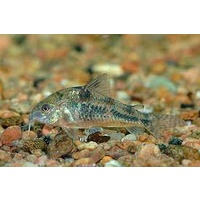
Peppered Corydoras have a mottled pattern and are another hardy, commonly kept species.
They are generally peaceful and active when maintained in suitable groups.
Aquaholics Online stocks a changing range of Corydoras catfish for freshwater aquarium enthusiasts across Australia.
Because live fish availability changes regularly, individual species and sizes may vary.
Browse the current range above to see which Corydoras are available now.
Corydoras are social fish and generally do best in groups. The appropriate number depends on aquarium size, species and filtration, but keeping several together is usually preferable to keeping one alone.
Smooth sand or fine, non-abrasive substrate is generally ideal because Corydoras naturally forage along the bottom using their sensitive barbels.
Corydoras may eat food that reaches the bottom, but they are not aquarium cleaners. They still require a complete diet and do not replace normal maintenance.
Suitable foods include sinking catfish pellets, bottom-feeder wafers, small sinking pellets and appropriate frozen foods.
Yes, Corydoras and Guppies are often compatible when aquarium size, temperature and water conditions suit both species.
They sometimes can, provided the Betta has a suitable temperament and the aquarium offers enough space. Individual Betta behaviour can vary considerably.
Many Corydoras can coexist with adult freshwater shrimp, although very small shrimp or young may still be vulnerable depending on the species and aquarium.
No, but live plants can provide cover and help create a more natural environment. Open substrate areas should still be available for foraging.
Corydoras can naturally make occasional trips to the surface to gulp air. Frequent or unusual surface activity may also warrant checking water quality and oxygen levels.
Aquaholics Online ships live fish to eligible locations throughout Australia, subject to availability, regional restrictions and biosecurity requirements.


Add your favourites to cart

Select Afterpay at checkout

Log into or create your Afterpay account, with instant approval decision

Your purchase will be split into 4 payments, payable every 2 weeks
All you need to apply is to have a debit or credit card, to be over 18 years of age, and to be a resident of country offering Afterpay
Late fees and additional eligibility criteria apply. The first payment may be due at the time of purchase
For complete terms visit afterpay.com/terms