 My Account
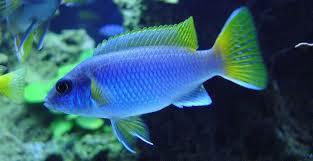
Acei Yellow Tail Cichlid – Pseudotropheus sp. “acei” Msuli Point 5cm
ARRIVE ALIVE GUARANTEED!
Product Code: LF-ACMP5CM

Dispatch In 1-2 Business Days
or 4 payments of $5.60 with
 Info
Info
Acei Yellow Tail Cichlid – Pseudotropheus sp. “acei” “Msuli Point” 5cm
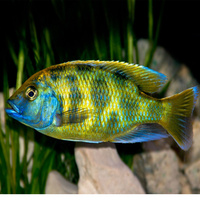
Acei Yellow Tail Cichlid – Pseudotropheus sp. “acei” “Msuli Point” 5cm is a striking Lake Malawi mbuna known for its blue to violet-blue body and contrasting bright yellow tail and fins.
The Msuli Point Acei is particularly popular in African cichlid aquariums because it is active, colourful and generally considered one of the more social and comparatively peaceful mbuna species.
Acei naturally occur along the rocky and sandy shorelines of Lake Malawi, where they are often associated with submerged wood, rocks and open swimming areas. They are unusual among mbuna because they can form loose groups and spend considerable time swimming in open water.
Fish Profile
- Common name: Acei Yellow Tail Cichlid, Yellow Tail Acei
- Scientific name: Pseudotropheus sp. “acei” “Msuli Point”
- Sale size: Approximately 5cm
- Adult size: Approximately 12–14cm
- Origin: Lake Malawi, Africa
- Locality: Msuli Point
- Type: Mbuna African Cichlid
- Temperament: Semi-aggressive; relatively peaceful by mbuna standards
- Temperature: 24–28°C
- pH: Approximately 7.6–8.8
- Water hardness: Hard, alkaline water
- Recommended aquarium: Around 300 litres or larger for an established group
- Diet: Primarily herbivorous/aufwuchs-based with suitable quality cichlid foods
- Breeding: Maternal mouthbrooder
About the Yellow Tail Acei
The Yellow Tail Acei is one of the most recognisable Lake Malawi mbuna. Its deep blue body develops a striking contrast against bright yellow fins, particularly the caudal fin.
Unlike many strongly territorial mbuna, Acei are naturally more group-oriented. They are active swimmers and can make an impressive display when maintained in a suitable group within a spacious Malawi aquarium.
They are still African cichlids, however, and normal mbuna territorial behaviour can occur. Providing adequate aquarium space, visual barriers and appropriate stocking is important.
Aquarium Setup
A suitable Acei aquarium should combine rockwork and hiding places with plenty of open swimming space.
Use rocks to create caves, passages and visual barriers while retaining open areas where the fish can move freely as a group.
A sand-based substrate works well in a Lake Malawi setup. Acei are also naturally associated with submerged wood in parts of their range, although any aquarium wood used in a Malawi aquarium should not compromise the hard, alkaline water conditions required by the fish.
Strong biological filtration, good oxygenation and regular aquarium maintenance are particularly important when keeping groups of African cichlids.
Water Conditions
Yellow Tail Acei are adapted to the hard, alkaline water of Lake Malawi.
- Temperature: 24–28°C
- pH: Approximately 7.6–8.8
- Hardness: Moderately hard to very hard water
Avoid sudden changes in temperature or water chemistry. Stability is more important than continually trying to adjust small variations in water parameters.
Feeding Yellow Tail Acei
In Lake Malawi, Acei feed heavily on algae and associated organisms growing on submerged surfaces, particularly wood.
In the aquarium, provide a varied diet centred around quality foods suitable for herbivorous and omnivorous African cichlids.
Suitable foods can include:
- Quality African cichlid pellets
- Spirulina-based foods
- Vegetable-rich flakes and pellets
- Occasional appropriate supplementary foods
Avoid excessive feeding and very rich diets. Feed amounts the fish can consume readily while maintaining good water quality.
Temperament and Tank Mates
Acei are generally considered relatively peaceful compared with many other mbuna, but they should not be treated as peaceful community fish.
They are best kept with appropriately sized Lake Malawi cichlids that prefer similar hard, alkaline water conditions.
Keeping several Acei together can allow their natural group behaviour to be seen while helping spread aggression between individuals. Aquarium size, sex ratios, tank layout and the temperament of other cichlids should all be considered when planning a Malawi community.
Avoid mixing different geographic Acei colour forms if maintaining locality-pure breeding lines is important, as closely related forms can hybridise.
Breeding
Yellow Tail Acei are maternal mouthbrooders.
After spawning, the female carries the fertilised eggs and developing fry in her mouth until the young are sufficiently developed to be released.
A spacious aquarium with suitable rockwork and reduced harassment from other fish can improve breeding conditions.
Why Choose an Acei Yellow Tail Cichlid?
The Yellow Tail Acei combines classic Lake Malawi colour with active swimming behaviour and a temperament that is often easier to manage than more aggressive mbuna.
The combination of a blue body and bright yellow fins makes the Msuli Point form particularly attractive in a well-designed African cichlid aquarium.
Browse more African Cichlids available from Aquaholics.
Frequently Asked Questions
How big do Yellow Tail Acei Cichlids grow?
Adult Yellow Tail Acei generally reach approximately 12–14cm, although individual size can vary.
Are Acei Cichlids aggressive?
Acei are generally regarded as relatively peaceful by mbuna standards, but they are still territorial African cichlids. Suitable aquarium size, rockwork and compatible tank mates are important.
Can Yellow Tail Acei be kept in groups?
Yes. Acei are naturally more group-oriented than many mbuna and are commonly maintained in groups in suitably sized aquariums.
What size aquarium do Acei Cichlids need?
A spacious aquarium is recommended because Acei are active swimmers and can reach around 12–14cm. Around 300 litres or larger is a useful target for an established group.
What temperature should Yellow Tail Acei be kept at?
A temperature of approximately 24–28°C is suitable.
What pH do Acei Cichlids prefer?
Yellow Tail Acei prefer hard, alkaline Lake Malawi conditions, with approximately pH 7.6–8.8 being suitable.
What do Yellow Tail Acei eat?
Acei naturally feed heavily on algae and associated organisms growing on submerged surfaces. In captivity, offer quality African cichlid foods with a strong vegetable and spirulina component.
Are Yellow Tail Acei mouthbrooders?
Yes. They are maternal mouthbrooders, with the female carrying developing eggs and fry in her mouth.
- 1 x Pseudotropheus Acei Msuli Point - Yellow Tail Acei 5cm
DOA Policy for Live Fish shipping
At Aquaholics, we place utmost importance on the careful shipping of live fish to ensure their safe arrival. Our commitment to quality includes taking various measures during transit. Each fish bag is infused with medical-grade oxygen and an ammonia-neutralizing solution. In colder periods, we also utilize heat packs to maintain optimal temperatures. However, we understand that unforeseen circumstances can sometimes lead to unfortunate outcomes. To provide you with peace of mind, we have implemented a Dead-on Arrival (DOA) policy that ensures you are covered in such situations.
Procedure:
- Owner's Presence: It is essential for the owner or an authorised representative to be available at the provided shipping address to receive the fish. If no one is available, the courier will leave your parcel in a safe space as all fish orders are shipped ATL.
- Shipping Address: Please provide a valid street address for shipping. Ensure the address is accurate and complete to avoid any delivery issues.
- Reporting DOA: If you receive a fish that is dead on arrival, please notify us promptly. Within 2 hours of receiving the fish, send an email to our customer support team. Include the following details in your email:
- Name: Your full name
- Order Number: The unique order number associated with your purchase
- DOA Fish Picture: Attach a clear picture of the deceased fish
Terms and Conditions:
- Timely Notification: Please make your DOA claim within 2 hours of receiving the fish. Claims submitted after this timeframe will not be eligible for compensation.
- Proper Documentation: Ensure that your email includes accurate and complete information, including your name, order number, email, and a clear picture of the deceased fish. Incomplete or inaccurate information may delay the processing of your claim.
- Verification: Our customer support team will review the provided information to verify the DOA claim. Once the claim is validated, we will proceed with the appropriate compensation.
- Compensation Options: In the event of a DOA, we offer two compensation options: a) Store Credit: You will receive a store credit equal to the value of the deceased fish, which can be used for future purchases. b) Refund: We can issue a refund for the value of the deceased fish, processed through the original payment method used for the purchase.
- Shipping Costs: Please note that shipping costs are non-refundable unless the entire order is considered a DOA.
- Conditions Apply: Our DOA policy covers only fish that are dead upon arrival. It does not apply to fish that perish after successful delivery and acclimation to their new environment.
We are committed to providing the best possible experience for our customers and ensuring the well-being of our live fish. If you have any questions or concerns regarding our DOA policy, don't hesitate to get in touch with our customer support team at doafish@aquaholicsonline.com.au , and we will be glad to assist you.
 Note: The terms and conditions outlined in this DOA policy are subject to change without prior notice. We recommend reviewing the most up-to-date policy on our website or contacting our customer support team for any updates.
Thank you again for allowing us on your aqaurium journey.
Jesse Elstak
Owner
- Species - Pseudotropheus Acei Msuli Point
- Common Name - Yellow Tail Acei
- Mature Adult Size - 6"
- Origin - Lake Malawi
- PH Range - 7.2 -8.0
- Tempreature Range 24°c - 28°c
- Water Type - Hard Alkaline
- Temperature - Tropical 24 - 28
- Breed Type - Mouthbrooder
- Size - 5cm
- Sex - Unsexed
| SKU | LF-ACMP5CM |
| Barcode # | 642889756564 |
| Brand | Live Fish |
| Shipping Weight | 0.1000kg |
| Shipping Width | 0.100m |
| Shipping Height | 0.100m |
| Shipping Length | 0.100m |
We Also Recommend
More From This Category
TRUSTED BY 100,000+ FISH-KEEPING ENTHUSIASTS AUSTRALIA-WIDE

Shop Now. Pay Later.
Always interest-free.

Add your favourites to cart

Select Afterpay at checkout

Log into or create your Afterpay account, with instant approval decision

Your purchase will be split into 4 payments, payable every 2 weeks
All you need to apply is to have a debit or credit card, to be over 18 years of age, and to be a resident of country offering Afterpay
Late fees and additional eligibility criteria apply. The first payment may be due at the time of purchase
For complete terms visit afterpay.com/terms